The purpose of the Best of the Briefing series is to help you stay updated on important realities confronting modern Christians -- LGBT rights, Christianity & politics, secular materialism, abortion, Roman Catholicism, and the like. The articles included in these volumes say particularly important things in particularly helpful ways (in my opinion, at least). I hope that you find them useful.
If you prefer the audio podcast to the transcripted articles, you can find them arranged by date on Mohler's website.
If you're a Logos user, you'll be glad to know that the documents are in .docx format, which you can use to create a personal book in your Logos library.
In the closing month of 2016, developments in the West shed light on two cultural forces that are very significant in the Philippines.
The first was secular humanism and the developed countries that have fully embraced it (or should we say, have become enslaved by it!). Articles number 6, 2, and 3 are all from a single episode of The Briefing. Read together, they show secular humanism has produced a society that is completely confused in terms of morality –
a society that marginalizes people with Down Syndrome in favor of parents who have murdered their unborn babies with Down Syndrome; a society that is revolted at the idea of treating the mangled remains of aborted fetuses as human remains.
The second cultural force brought to our attention was the Roman Catholic Church. The reign of Pope Francis, which began in March 2013, has led to growing dissension within the RCC. Recently, it has become clear that this dissension has reached to the very highest levels of the church's hierarchy. Understanding such issues will help us to bring the errors of the RCC to the attention of our Catholic friends, in the hope of opening their minds to the biblical gospel.
These two concerns are, in my opinion, the most important ones covered in this volume of The Best of the Briefing, though also worth noting are attempts in Canada to redefine the meaning of family (article no. 1), and a recent discussion about 'fake news' and bias in the mainstream media. Below is the list of articles included in this volume.
Marriage & Family
1. Redefining parenthood, redefining civilization: Ontario's radical new "All Families Are Equal Act" (December 1, 2016)
2. By our outrage we reveal ourselves: France bans commercial showing happy children with Down syndrome (December 5, 2016)
3. You'll know them by their outrage: Fury over Texas requiring fetal remains be treated as human remains (December 5, 2016)
Media & Entertainment
4. The real problem of fake news: Why does the Left give late night television a pass? (December 7, 2016)
5. Shrugging at the truth: How postmodernism paved the way for fake news (December 9, 2016)
Politics & Society
6. Moral outrage over currency? Bank of England apologizes for including animal product in new £5 note (December 5, 2016)
Religion
7. "Winks and nods" from Pope Francis sow confusion in the Roman Catholic church on divorce (December 15, 2016)
8. "Legalized medical assistance in dying": Catholic bishops in Canada capitulate to the culture of death (December 15, 2016)
Science & Medicine
9. Who is the relevant authority on science? How evangelicals are baffling research scientists (December 1, 2016)
10. The folly of Scientism: Washington Post opposes Scott Pruitt for "rejecting settled science" (December 13, 2016)
Would you read a book about the history of grass? Or what about this,
would you like to be known as a one of the most significant figures in
the history of grass? I’m going to go out on a limb and say that nobody
cares, right?
The really
interesting thing is that the Bible says that man is like grass, and all
of his glory is like the flower of the field (Isaiah 40:6). That puts things into
perspective, doesn’t it? People say that we’re living in historic times.
Years from now, world history teachers will be talking about Barack
Obama, the pro-abortion movement, the LGBT rights movement, and now, the
presidency of Trump – all things that have blossomed in this
generation. From a human standpoint, they’re truly historical! And yet,
all of this is just the history of grass as far as God is concerned.
Whatever influence all these so-called “world movers and shakers” have
is insignificant by God’s standard. You see, God isn’t interested in
building something that will last for the next hundred years, or even
the next thousand years! God is only interested in building what will
redound to His glory for endless ages. That’s God’s standard for
significance. That’s the time span we should all have in mind when we’re
talking about a life that matters.
So even as the
world is making a big fuss over Trump’s election, and other such secular
happenings, let’s devote ourselves to the very things that the world
dismisses as foolish and useless: the things of God, and of Jesus
Christ, and of the Holy Spirit. Because when the last day comes, and
heaven’s record is opened before the Great Judge, it is God’s work in
and through His people that will be shown to be truly important. And that's precisely what Psalm 78 helps us do.
[READ: Psalm 78:1-11 and Psalm 78:67-72]
Psalm
78 has two main purposes. The first is to exhort God’s people to
faithfulness (Psa. 78:7-8). The second is to explain why God
chose David and his descendants to rule Israel. The reason is that the
tribe of Ephraim was unfaithful to the LORD, so He rejected Ephraim and
raised up the tribe of Judah instead. And from the tribe of Judah, he
chose David.
Ephraim vs. Judah
At the end of the book of Genesis,
Joseph brought his two sons to be blessed by Jacob. Although Ephraim was
the younger son, he received the greater blessing than his older
brother, Manasseh (Gen. 48:20).
In the period of
the Judges, the tribe of Ephraim began
to asserts its power among the tribes. In Deborah's Song, they're called
the "root" of those who fought against God's enemies, the Amalekites
(Judg. 5:14). On separate occasions, they argued with two of Israel's
judges for not being called upon to defend Israel (Gideon, Judg. 8:1-3;
and Jephthah, Judg. 12:1).
Ephraim also opposed King David. After the death of his predecessor
Saul, they supported Saul's son, Ish-bosheth (2 Sam. 2:8-9). Later, they
assisted Absalom in his coup attempt against his father David (2 Sam. 18:6).
Ephraim’s opposition to the godly men of Israel became even more
prominent after Solomon’s reign. Because of Solomon’s unfaithfulness,
God split the kingdom into two. The Southern Kingdom remained under
Solomon and his descendants, while the Northern Kingdom came under
Jeroboam, an Ephraimite (1 Kings 11:26). Jeroboam then made Bethel, an Ephraimite town,
the religious capital of the Northern Kingdom (1 Kings 12:33). But the Lord wasn’t
worshipped at Bethel; idols were. From then on, Ephraim represented
Israel’s religious apostasy.
In short, Psalm 78
highlights Ephraim because it represents all the sinfulness and idolatry
of Israel as a whole. In contrast, Judah represents the minority among
the Israelites who remained faithful to the Lord. In the end, Ephraim,
and the other Israelite tribes that followed it, faded into
insignificance, while Judah became the tribe of the Davidic kings, and
ultimately, the Messiah.
Grass vs. Trees
Here’s another thing to keep in mind: just as those
who were faithful to the LORD were often the minority, they were the
more significant ones. We often equate size and power with significance –
whoever has the larger numbers and the bigger stick is the more
significant one, right?
But God’s Word tells us that even the
most powerful men throughout history are just grass. They are the most
significant grass in the world! (Isaiah 40)
But the righteous, we are told elsewhere in Scripture, are like a tree planted by streams of water (Psalm 1).
Most people want to have lives that matter. So they follow trends, they
do what’s “relevant”. They value what everyone else values! From a
human perspective, that’s really common sense. There’s safety in
numbers, especially if those numbers include the elite members of
society. It’s that simple.
But Psalm 78 tells us, No! Do you
want your life to matter? Then forget what the world says, and pursue God!
It's great to be back after a long hiatus! One of the things that loaded up my schedule was preparing to speak to my church's youth about homosexuality. That's what I'm sharing in this post.
It was an hour-and-a-half message, which I subdivided into five segments, as follows:
I hope you'll be as encouraged listening to these, as I was preparing them.
1. INTRODUCTION
We can’t ignore the LGBT issue. The question isn’t whether we will respond, but whether our response will be biblical or unbiblical.
Christian groups have adopted very different stands on this. But what is the right response? As we think about the answer to that, there are two things that we need to be concerned about.
Our first concern is the truth. Homosexuality is part of much larger issues, like sin, purity, and God’s glory. We want to avoid isolating homosexuality from these bigger concerns
Our second concern is the heart – our hearts. God wants us to glorify Him in how we think, how we talk, and how we act. We need to love LGBTs and faithfully share the gospel with them.
This is our goal: to have a biblical attitude toward homosexuality and LGBTs.
The LGBT movement has ballooned in our generation. We should be concerned, but not too much. The church has been in similar situations before.
LGBT IN ANCIENT CIVILIZATIONS
Homosexuality and similar blurring of the sexes isn’t new or recent. It was practiced during Abraham’s time, about 2,000 B.C., in the Shang Dynasty (16th-11th century B.C.), by the ancient Greeks and Romans, in New Testament Times, and even in Pre-Hispanic Philippines! So, we shouldn’t be surprised that it’s an issue today.
But why is the LGBT movement of today is so aggressive and hostile toward biblical Christianity?
LGBT IN THE WAKE OF MORAL RELATIVISM
During the Enlightenment Period in Europe (17th-18th centuries), many great scientists like Galileo, Kepler, and Newton pursued science from a Christian worldview. But others wanted to use science as a weapon against God, the Bible and the institutional Church. They claimed that reason and science could explain everything, so people didn’t need God or the Bible.
Of course, if human reason is the standard for morality, then morality is just human beings finding reasons to do what they want. This is the essence of moral relativism.
Fast forward to the present day, and we see that moral relativism has taken over Europe and America, and it’s becoming more and more prevalent here in the Philippines. More and more, people are embracing the lie that you can create your own truth.
One of the reasons that the LGBT movement has become very strong in recent decades is that society has lost the ability to look at homosexuality and say, “that’s wrong.”
In fact, people have devoted a lot of money and expertise to explain homosexuality in purely naturalistic terms.
WHAT ARE THE CULTURAL ELITES SAYING ABOUT HOMOSEXUALITY TODAY?
“Homosexuality is GENETIC.” In 1995, Time Magazine published an article entitled, “Search for a Gay Gene”, about scientists’ search for genetic causes for homosexuality. These studies, however, far from proved that homosexuality was predetermined by one's DNA.
“Homosexuality is caused by the environment.” Others have focused on how a person’s environment can influence homosexual behavior. But these studies often don’t distinguish between causation and indirect relation. To put it simply, they misinterpret the data, or make the data say more than it actually says.
Despite the limitations of these studies, they've have been sensationalized by the mass media, so that nowadays, people just assume that science has “proven” that homosexuality is completely natural, and therefore ok. This has allowed the movement to grow rapidly, even in the Philippines.
In light of all these developments, we as Bible-believing Christians might be tempted to worry. But homosexuality and cultural support for homosexuality aren’t new. The Church has faced this before. The reason we don’t know that is because for a long time, Christianity was the biggest moral influence on modern civilization. We’ve gotten used to that, but things are changing back to the way things were before Christianity became dominant. We have to be ready: ready to obey God on this matter; ready to accept whatever consequence society may impose on us; and ready to do it all, not out of hate, but out of love: love for God, love for the truth, and love for people who need Christ just as much as we do.
Does the Bible really say that homosexuality is a sin?
Some professing Christians would answer that question with a resounding No! They claim that the common proof-texts against homosexuality are either misinterpreted or mistranslated because of prejudice. This is the revisionist view. Are they right?
GENESIS 19 – SODOM AND GOMORRHA
Revisionist View: Sin of gang rape. This is not a universal condemnation of gay sex, but a bad form of gay sex. Sin of inhospitality.
Biblical Response: Sodom was condemned for a whole bunch of sins, not just homosexuality. But homosexuality was definitely included in that list. (Compare Ez. 16:50 and Lev. 18:22)
DAVID AND JONATHAN
Revisionist View: David and Jonathan were lovers. (2 Sam. 1:26; 1 Sam. 18:1,4; 20:41)
Biblical Response: We read these texts with hyper-sexualized lenses. Cf. Jacob's soul was “knit to” Benjamin his son = favoritism, not sexual (Gen 44:30). David and Jonathan not said to lie together. And if you know David's life, his issue was women.
JESUS’ TESTIMONY
Revisionist View: Jesus never said anything about homosexuality!
Biblical Response: Jesus came to correct false teaching, so if the traditional view of homosexuality was wrong, He would have addressed it when we spoke about sexuality. Rather, He affirmed the traditional view. (Mark 10:6-9)
“ARSENOKOITAI” - 1 Corinthians 6:9-10; 1 Tim 1:9-10
Revisionist View: Arsenokoitai appears for the first time in NT, so we have to figure out what it means. Therefore, it refers to sexual and economic exploitation (pedophilia).
Traditional View: Paul didn't pull this word out of nowhere. He pulled a word from the LXX of Lev 20:13 where we find arsen and koite, right beside each other. There's no other place where these two words occur together, beside each other. Any Hellenistic Jewish convert who came across this word would have recognized the reference. Moreover, if Paul had wanted to refer to pedophilia, there was a specific word for it: paiderastes.
In conclusion, the Bible does say that homosexuality is a sin in God’s eyes.
Isn’t homosexuality natural to homosexuals? How can it be wrong to be yourself?
The answer to that is simple: we’re all sinful and God calls all of us to be completely changed. Everyone – heterosexual or homosexual – is a sinner, and more specifically, sexually impure. We are sinful by nature, and that's why we need a new nature. Without that new nature, we’re spiritually dead – we’re cut off from God who is the source of all spiritual life. (John 3:3; Eph. 2:1-6; 2 Cor. 5:17)
Many believe that whatever is natural is good. But the Bible says that we live in a world that has been distorted by sin. So nature is a bad standard for deciding what’s good or bad. The only truly reliable standard we have is God’s Word. And it tells us to reject our sinful nature, to seek God’s forgiveness through Jesus Christ, and to be transformed into new creatures.
4. How Can I Minister to Those Who Struggle with Homosexual Desires?
RESOLVE TO DO IT! ... or you probably never will.
PROVIDE A SAFE ENVIRONMENT. We have a natural tendency to excuse the sins that we struggle with, even while we condemn sins that we don’t see in ourselves. But let’s be humbled over our own brokenness. Let’s be consistent in addressing all kinds of sins.
FOCUS ON RELATIONSHIP WITH CHRIST. We have to clearly and consistently communicate that God’s first concern for people struggling with homosexual desire isn’t that they become heterosexual. His first concern for them is that they have a living relationship with Him through Jesus Christ, so that they surrender all of their lives to Him, including their sexuality.
SET REALISTIC EXPECTATIONS. On the one hand, let him know that he’s not struggling alone. We all struggle. It’s just that most people struggle with heterosexual impurity, while a few struggle with homosexual impurity. But we’re all in this together (1 Cor. 10:13). On the other hand, don’t give false promises, like “Read the Bible, pray more and your homosexuality will go away.”
ENCOURAGE SAME-SEX FRIENDSHIPS WITH MATURE BELIEVERS. This will help the person see and experience for themselves God’s beautiful plan for same-sex relationships.
Should Christians support LGBT “rights”? Before answering that question, there’s a more basic question that needs to be addressed. As Christians, what is our place in society?
We're called to be salt & light. (Mat. 5:13-16)
We're called to serve society. (Eph. 4:28)
We're called to love our neighbors... even our enemies. (Mat. 22:39; Mat. 5:43)
We should be particularly concerned for the poor and helpless. (Luke 14:12-14)
We're called to submit to the government. (Rom. 13:1)
In light of these points, I think we can rephrase our question this way: Is it loving to support pro-LGBT laws?
The simple answer is NO, because we must “Take no part in the unfruitful works of darkness, but instead expose them” (Eph. 5:11). To support any law that supports homosexuality is to support homosexuality itself.
Another reason we shouldn’t support pro-LGBT laws is that they would do more harm than good. Let's look at the pending Anti-Discrimination Bill (ADB), for example.
THE ANTI-DISCRIMINATION LAW
At first glance, the Anti-Discrimination Bill (ADB) sounds good. According to him, it’s about equality for all. He talks about LGBTs as if they’re victims of society. But the evidence doesn’t support that. Just look around you. Are LGBTs under attack in our country? Just the opposite, actually. If, by and large, LGBTs aren’t being victimized in our society, why would we need the ADB?
In fact, the ADB in its current form would do more harm than good, because it would suppress freedom of speech and religion. We see this in the way the bill defines "discrimination". The danger has already been realized in other countries that have passed their own versions of the ADB (ex. Canada, England, US).
SAME-SEX MARRIAGE
We can't support this bill for many reasons.
It will require government to redefine, not only marriage, but sexuality and family as well. That’s more than an administrative adjustment. That’s a social revolution, right there.
For government to approve such changes in the law would mean that it supports the LGBT lifestyle, which has proven to be extremely harmful to people. The damage it has caused to people’s health and social relationships is staggering.
The typical pro-LGBT argument is, “We’re not hurting anyone, so just let us do what we want.” But they are hurting people, just not in an obvious way. To redefine sexuality, marriage, and family is to attack the institutions that have made civilization possible. It is also to deprive children of the stability provided by a household with a real father and a real mother.
And which sector of society will be affected the most? It will be the poor -- the ones who can least afford to play around, who don't have social and economic safety nets. If we destroy the institutions of marriage and the family, we can only guess how much harm it will cause to the poorest and most vulnerable members of our society.
We as Christians should be very clear on where we stand with regard to the LGBT rights movement. We stand against it, not because we hate LGBTs, but because we love them and we love our neighbors.
Several weeks ago, a friend brought a legal case to my attention, and I think that it’s something evangelicals ought to be informed about. Because the topic is quite technical, this article is longer than my typical posts, but I would encourage you to read through it carefully, because it really is significant. And if you’d like to contribute your thoughts, or provide me with further leads relevant to the pro-LGBT agenda in the Philippines, I invite you to leave a comment.
In November 2002, Rommel Silverio petioned the Regional Trial Court (RTC) of Manila to have his first name and sex changed in official documents. His basis: he is “anatomically male but feels, thinks and acts as a female” and has always identified himself with girls since childhood.
Prior to his petition, he had consulted with several doctors in the United States,2 and received psychological examination, hormone treatment, and
breast augmentation. Finally, he underwent sex reassignment surgery
in Bangkok, Thailand.
Upon the filing of his petition with the RTC, Silverio was even engaged to be married to a certain Richard P. Edel.
The court ruled in favor of Silverio. It gave the following reasons:
It was “more in consonance with the principles of justice and equity…. Petitioner’s misfortune to be trapped in a man’s body... should not be in any way taken against him”;
Likewise, “no harm, injury [or] prejudice will be caused to anybody or the community”; and
There was no reason presented to the court to deny the petition.
The RTC’s decision was problematic, however, and in August 2003, the Republic of the Philippines filed for reconsideration to the Court of Appeals (CA).
In February 2006, the CA overturned the RTC’s decision, stating, “There is no law allowing the change of either name or sex in the certificate of birth on the ground of sex reassignment through surgery.”
Silverio then appealed to the Supreme Court (SC), which responded to each point raised by the RTC.
First, to the RTC’s reference to “principles of justice and equity”, the SC replied, “Petitioner believes that having acquired the physical features of a female, he became entitled to the civil registry changes sought. We disagree.” With regard to change of name, “The State has an interest in the names borne by individuals and entities for purposes of identification. A change of name is a privilege, not a right.” The State allows for change of name in situations where a citizen “will be prejudiced by the use” of his name. Silverio, however, failed to demonstrate this.
Second, the SC disagreed that no harm would come of granting the petition, stating that it “may only create grave complications in the civil registry and the public interest.” For example, in light of Silverio's intention to marry his male fiancé, enabling him to change his legal sex to “female” would entail massive implications on marriage and family laws. Also, such a reassignment would require similar changes in laws relating to women.
Third, the SC took an entirely different posture toward the law than did the RTC. The RTC essentially took the stance that the court should grant the petition because there was "no reason to deny it". The SC, however, recognized that the RTC was acting beyond the authority of the Judiciary. The SC mildly chastised the lower court by stating something that even higher-grade students should know: “The duty of the courts is to apply or interpret the law, not to make or amend it.”
In short, the SC ruled that “The petition lacks merit.”
A Modest Victory
The outcome of the Silverio Case is certainly something that Filipino evangelicals should be relieved and thankful for, especially since this set a precedent for deciding future cases. But we also need to recognize that this modest victory was in 2007, and was clearly not the end of our struggle against the movement for LGBT “rights”.
Some concluding statements of the SC ruling make this clear. For example, it pointed out that the fatal flaw in Silverio’s petition was that “there is no such special law in the Philippines governing sex reassignment and its effects.” It also recognized the possibility, however, of the Legislature passing such laws in the future.
What can Christians take away from this?
First, let’s remember that our Lord’s purpose is not to create a Christian civilization, but to build His church (Matthew 16:18). He will accomplish this, not through government policies or a cultural movement, but through the faithful proclamation of the gospel (Galatians 6:14; 1 Corinthians 15:3). So, while we should stay informed of what’s happening in our government and the culture at large, the most important thing by far is for us to treasure the gospel of salvation by grace alone, through faith alone, in Christ alone, to the glory of God alone, on the basis of Scripture alone.
Second, let’s repent of any hint of self-righteousness and lovelessness we may have toward LGBTs. The Bible declares that there is only one difference between sinners who are under God’s wrath and saints who are forgiven, adopted, and born again. That difference is the free, unmerited grace of God. And having received such grace and such love from God, we are then called to invite others to receive the same, and to do it in a way that reflects God’s heart.
Third, when the opportunity comes up, we can gently correct some of the common assumptions of our pro-LGBT neighbors.
Assumption: It’s my right to choose my own gender/sex.
Answer: You and I are privileged to live in a country with freedom of religion and freedom of speech, so we’re free to believe what we want. But as far as legal status is concerned, our laws have established that a person’s sex is determined at birth, based on genitalia, and can’t be changed.
Assumption: Allowing for homosexual marriage isn’t going to harm anyone.
Answer: I think that it will harm society, but in ways that we don’t see right away. For example, it will require a massive renovation of our legal system in relation to marriage, family, and women’s rights. LGBTs actually comprise only a very small minority (about three percent). I don't think the other ninety-seven percent should have to bear the financial cost and practical complications that will result. (At this point, it might help if we could present evidence of the consequences of endorsing the LGBT lifestyle.)
Conclusion
Filipino evangelicals should take note of the Silverio Case because it helps us to better understand the relation between the law and LGBT "rights" in our country. It also serves as an example of how the pro-LGBT agenda tries to make headway by increments. It will appeal for concessions that seem small and relatively harmless, but actually have massive implications for government and society. So let's stay informed while persevering in the Lord's work.
2 Why the U.S.? Probably because the American Psychiatric Association, the American Psychological Association, and other relevant bodies, now support the LGBT rights movement.
This is Part 5 of a series of guest
posts entitled "The Constitution and Cardboard Justice", by my friend
and churchmate, Goya Pableo. To read the previous articles, click on the links below. When the current Constitution was being drafted back in 1986, the term “general welfare” was debated on. The term in the Preamble was not accepted by the Constitutional Commission since it might be understood as “the greatest good for the greatest number even if what the greater number wants does violence to human dignity” (Bernas, 2011). Instead, the phrase “common good” was used.
Although the Preamble is not a source of legal rights, its definition of the common good serves as a lens through which we should view the general welfare in Philippine law.
The Common Good influencing the General Welfare
Taking off from the Constitutional Commission’s deliberation, general welfare (a.k.a. Public Good) does not necessarily equate with what the majority desires but with what is good for them – even if they are in disagreement with it. Consequentially, if what the majority clamors for is not good for the whole nation, then the authorities must step in to uphold the law which protects our genuine general welfare.
The Issue of ‘Trust’
Out of 1,200 Filipinos surveyed, our President started his term with a trust rate of 91%. This is favorable, for it shows people’s approval of our recent civil authority, whether they acknowledge it being God-given or not. However, it is reckless to carry over that trust rate and assume the same for the conduct of the war against illegal drugs, using it as statistics implying support for unlawful methods. “Do you trust your President?” is clearly different from “Do you approve of the methods used to carry out the war on illegal drugs?”
Heartbreakingly, most Christians cannot delineate the end from the means, blatantly condoning – either by blind approval or bulging apathy – extrajudicial killings and “no mercy” police narcotics-operations in support of the President. Honoring the President does not necessitate that we approve of methods that could clearly place him and our nation in deeper peril.
The Issue of Approval
Approval of the war on illegal drugs is not automatically approval of the methods through which it is being carried out. True Christians should approve of the war on illegal drugs; the confrontation against these destructive substances, because we know that the true enemy of our souls uses these to bring our people under slavery and death. We pray for human security and economic growth, though temporal, but never at the expense of unlawfully executing our countrymen whom the majority may deem hopeless due to their drug problem. Let us never forget that in Christ, there is always hope.
And even if majority of our people approve of the methods being used (and that’s a stretched, hopefully baseless assumption), general welfare is not subject to popular vote since it is possible for a collective mindset to be outright wrong. Historically, the Israelites wanted Saul as King, Nazi Germany supported Adolf Hitler on the Holocaust, the crowd cried for Christ to be crucified – vox populi (the people's voice) is not always for the common good.
Eternal, Not Just Temporal
As Christians, we should seek the common good of our country – to “loosen the bonds of wickedness, undo the bonds of the yoke and free those that are oppressed”(Isaiah 58:8), “render true judgments, show kindness and mercy to one another” (Zechariah 7:9), “defend the rights of the afflicted and needy” (Proverbs 31:9), “to do justice, and to love kindness, and to walk humbly with [our] God” (Micah 6:8).
The outcome of these commands may or may not translate to economic growth and human security, because those are not what we are primarily after. However, obedience to these does result to the honor and praise of the Lord Jesus Christ, whose Gospel we proclaim and whose operational definition of general welfare is for our eternal good and His eternal glory.
What, then, could be done to help stop the killings? Ambitious as it might seem, we’ll attempt look at possibilities in the final post of this series.
Meanwhile, again let us heed what God says through the prophet Micah: walking in humility with Him is, assuredly, for our good
August has been a very interesting month as far as news and the Briefing are concerned. You'll notice there are more than the usual amount of articles in this volume, and from a wide range of topics.
Here are some of the most salient points in these articles:
The pro-LGBT movement has argued for the complete separation of gender from biological sex. Now, in light of the recently concluded Olympics, they're even beginning deny the biological distinction between male and female. This shows that the pro-LGBT ideology has become so radical that it is now willing to deny one of the most obvious facts of everyday human existence.
The success of the Moral Revolution is leading to escalating discrimination against Christians and Christian Institutions for holding to historic,Christian convictions. As things are going now, it might not be long before historic Christian Institutions (such as schools and hospitals) will be forced to either waive all support from the government or give in to its demands regarding issues like LGBT rights and abortion.
We may not be feeling the direct effects of these developments in the Philippines (yet), but let's not kid ourselves. The political and cultural elites here aren't far behind their Western counterparts. And as the elites go, usually, so goes the culture.
The purpose of the Best of the Briefing series is to help you stay updated on important
realities confronting modern Christians -- LGBT rights, Christianity & politics, secular materialism, abortion, Roman Catholicism, and the like. The articles included in these volumes say particularly important things in particularly helpful ways (in my opinion, at least). I hope that you find them useful.
If you prefer the audio podcast to the transcripted articles, you can find them arranged by date on Mohler's website.
If you're a Logos user, you'll be glad to know that the documents are in .docx format, which you can use to create a personal book in your Logos library.
Below is the list of articles included in this volume.
Business
The gender revolution arrives at the clothing store—but it's still organized male-female (August 22, 201)
The power of consumers: After dim sales report, Target announces new bathroom initiative (August 23, 2016)
Family & Education
Pending SB 1146 would mean the end of comprehensive Christian education in California (August 3, 2016)
Schools that refuse federal aid or request Title IX exemption blacklisted by secular left (August 3, 2016)
Good news for Christian higher education in California as lawmaker drops proposal—for now (August 11, 2016)
The "Good Parent" vs. the "Get-Real Parent": Deep moral insight for parents from an unexpected source (August 24, 2016)
Politics & Society
The fall of Roger Ailes can serve warning for Christians to avoid a media echo chamber (August 4, 2016)
When liberal policies outpace liberal preferences: San Francisco liberals don't want affordable housing (August 9, 2016)
Obama administration's transgender bathroom guidelines blocked by federal judge — for now (August 23, 2016)
From the French Revolution to 'burkini' bans: France's radical commitment to secularism (August 29, 2016)
Religion
Transgender deity in the Old Testament? Nonsense from a rabbi in The New York Times (August 15, 2016)
Science & Medicine
Will our brave new world include human-animal chimeras? NIH proposal erases ethical lines (August 8, 2016)
The misplaced trust of Scientism and the dangers of Neil deGrasse Tyson's "Rationalia" (August 8, 2016)
American College of Pediatricians: gender dysphoria debate is primarily about worldview, not science (August 11, 2016)
The moral behind the medical stat: 1 in 5 babies born in Indiana are addicted to drugs (August 17, 2016)
Sports
The NBA, creator of the WNBA, spurns North Carolina for codifying gender distinction (August 4, 2016)
The transgender revolution hits the Olympics … but not consistently (August 10, 2016)
No such thing as a "male body"? Transgenderism and the eclipse of biological sex (August 11, 2016)
This is Part 4 of a series of guest
posts entitled "The Constitution and Cardboard Justice", by my friend
and churchmate, Goya Pableo. To read the previous articles, click on the links below.
Since the recent bombing incident in Davao City, President Duterte has calibrated all of his power toward the vindication of his hometown and people. Likewise, the State looks at victims through the same protective lenses as the pater patriae1 - the protector, the “father”. If you harm the child, you infuriate the father.
For the purposes of this article, "victims" are those who have suffered physical, emotional, and/or mental harm, along with loss of property, wealth, and/or life at the hands of offenders under the influence of illegal drugs. Moreover, the families of victims are more than “third parties” (Wallace & Robertson, 2011); they also suffer, and sometimes more, with mental, emotional or even physical agony. Thus, we also treat family members and loved ones of the victims as victims themselves.
Generally, the State should subject offenders under judicial processes even if the victims are reluctant to file a case in court. Aside from the imprisonment of drug convicts, victims could also claim civil indemnity – damages – ranging from monetary compensation to restitution (Art. 100 & 104, The Revised Penal Code). The State is also bound to protect victims from further harm by issuing restraining orders and injunctions, or by putting them under witness protection programs (among other legal remedies and benefits).
The law implies that victims should forego vengeful actions against the offender and leave the full vindication to the State. If executed rightly, the law fully punishes the offender more than any extralegal remedy can: the deprivation of liberty, then of property and if warranted, of life (but as of writing, the Death Penalty is suspended) – after due process of law – is meant to do to the offender what he has done unto the State (and indirectly unto us as a nation). This would also mean physical and emotional suffering for the convict, with loss of property, wealth, and “life” (in a sense that his physical strength wastes away as he spends his years inside the penitentiary).
“You are not in their shoes.”
Yes, we do not feel what the victims feel, and never will we – their pain is uniquely theirs. Yet, if popular opinion attempts to appease the victims by condoning lawless methods as vindication, more harm will be done. Human vindication begets human vindication, and it cannot discern who is innocent and who is guilty before the law.
Although geared towards retribution, the law is a channel of reconciliation between the State and the offender, since the latter is, regardless of criminal bent, still the former’s ‘child’ (like the victims). Even if reconciliation between the offender and the victims is highly improbable, we know of a model that says otherwise. As offenders of the Most Holy God, reconciliation is paved through the blood of Christ – we have infuriated the Father, and He crucified His Son instead of us.
For All Are Offenders
As Christians, we are called to be as balm to the hurting. Encouraging vengeance and lawless retribution is adverse to our call. The Gospel that we carry is meant to make people realize that all are heinous offenders before Him, and that apart from Christ, we are bound to suffer eternal death in accordance with God executing His due process. This is the message we give to the victims of crimes in this world, with the hope that God would reconcile them to Himself for eternity.
If what the majority clamors for is in conflict with the established precepts of law, what do we do? We’ll look into that next.
For the meantime, may we continually comfort the hurting with the Gospel that we have received.
This is Part 3 of a series of guest
posts entitled "The Constitution and Cardboard Justice", by my friend
and churchmate, Goya Pableo. To read the previous articles, click on the links below.
An offense done against a person is considered done against the State, much like every sin we’ve committed is, in totality, a sin against God.
We already know the basic concept of human rights and due process. Now, we’ll look at the State’s sovereignty and due process, zooming in on how our policemen are carrying out their mandate in this war against illegal drugs.
‘Police power’ (not to be confused with the power of policemen) is inherent in any State, describing its authority to enact laws for the public welfare. The State’s sovereignty relies greatly on this inherent power for survival. However, does that mean that the State could do everything it desires to guarantee ‘public welfare’?
Police power is inherent but not limitless. The principle of due process -- not just the mere semblance of it, but the principles of justice and fairness which it seeks to protect -- is related to the doctrine of natural law and inalienable rights (Mott, 1926). Due process is a necessary boundary to police power, especially in cases concerning human lives.
Police Operations
According to news sources, more than 300-500+ alleged drug peddlers have been killed in police operations. The policemen do not condone summary killings; however, they would still undergo investigations to verify the validity of their operations regardless of the pardon1 that our President promises to give them. An advance pardon would not exclude one from the entire operation of the law.
It is tempting to be discouraged by how the government is wielding its police power seemingly without regard to due process. On the other hand, we acknowledge that policemen die in these buy-bust operations. How then do Christians honor the civil authorities and at the same time, uphold the rule of law?
God’s Sovereignty Over All
God’s Word admonishes us to submit to our government (Romans 13:3-4) for it protects the innocent and punishes wrongdoing (the punishment being commensurate to the crime committed, as pronounced in Exodus 21:23-25 and as echoed by lex talionis). By condoning summary killings and intolerant police operations, we are systematically disintegrating this protective shield. As Christians, we should also consider that every person executed – whether summarily or under the police, whether alleged drug peddler or policeman – is deprived any further opportunity to hear the Good News, repent, and be saved (even if that has to happen in prison).
In light of God's grace towards us as sinners, can we really approve of the arbitrary killing of any human being?
God's sovereignty does not excuse our irresponsibility, whether it’s in blindly supporting or vehemently detracting our current government. As Christians, let us uphold each person’s dignity, remembering that only upon hearing and understanding the Gospel can any one be pardoned of sin committed against the Sovereign God.
One major argument of those who condone this war is “What of the victims? You’re not in their shoes…” We’ll thresh that out in the next post.
Mott, Rodney L. Due Process of Law: A Historical and Analytical Treatise of the Principles and Methods Followed by the Courts in the Application of the Concept of the "law of the Land" Indianapolis: Bobs-Merill Company, 1926.
I've been immersing myself in research on the LGBT issue, particularly with regards to anti-discrimination laws and same-sex marriage. There's so much more reading to do, but already my brain feels like pudding.
Before I call it a night and shift to more pleasant labors, I just want to share this partial timeline that I've put together regarding the advance of the LGBT agenda in the Philippines. It's definitely not light or happy reading, but we need to inform ourselves because we cannot be ignorant or silent on this issue.
1968
The Metropolitan Community Church (MCC), a non-denominational Protestant church, is founded in the United States. It is " the world’s first church group with a primary, positive ministry to gays, lesbians, bisexual, and transgender persons."
1987
July 6 - The Family Code of the Philippines is passed. Article 1 states, "Marriage is a special contract of permanent union between a man and a woman entered into in accordance with law for the establishment of conjugal and family life. It is the foundation of the family and an inviolable social institution whose nature, consequences, and incidents are governed by law and not subject to stipulation, except that marriage settlements may fix the property relations during the marriage within the limits provided by this Code."
LAGABLAB helps craft the first version of the Anti-Discrimination Bill, seeks to offer special civil protections for LGBTs. The ADB is then submitted to Congress by Miriam Defensor-Santiago and Akbayan Representative Etta Rosales. The bill faces stiff opposition and lacks a strong base of supportive legislators.
2001
LAGABLAB, Amnesty International Pilipinas and the International Gay and Lesbian Human Rights Commission (IGLHRC) and other supportive organizations launch the Stop Discrimination Now Campaign to support the passage of the bill.
2006
September 13 - MCC, which has been limited first to Manila, then to Makati, begins establishing Bible studies and support groups in Quezon City.Eventually, MCC's Rev. Ceejay Agbayani would have his ordination repealed and form his own church, the LGBTS Christian Church.
September 23- Jennifer Cagandahan officially becomes "Jeff" and is recognized as legally male, by virtue of the Supreme Court's upholding the decision of the local court of Siniloan., Laguna.
2009
The Inclusive Bible is published. The TIB is the first "egalitarian" translation of the Bible, replacing male pronouns and claiming to present the same ancient truths in "new and non-sexist ways".
2011
ABS-CBN releases "Nasaan Ka, Elisa," the first teleserye to explore LGBT themes. This is followed by "Huwag Ka Lang Mawawala" (2013), and "Till I Met You" (2016). GMA Network follows suit with "My Husband's Lover" (2013), "The Rich Man's Daughter" (2015), and "Destiny Rose" (2015).
2012
The Queen James Bible is published. The description reads, "The Queen James Bible is based on The King James Bible, edited to prevent homophobic misinterpretation."
2013
March 25 – The Quezon City Pride Council is launched. It is created by official order of Mayor Herbert Bautista in order to oversee the integration of all city programs and projects for the LGBT community. The Council is composed of notable individuals that promotes and advocates LGBT rights from different industry and profession. Also part of the Council are members of the Local Government sectors.
June 28 - The Inquirer reports that the country ranked as the 10th most gay-friendly in a global survey covering 39 countries, in which only 17 had majorities accepting homosexuality. Titled "The Global Divide on Homosexuality," the survey conducted by the Pew Research Center shows that 73 percent of adult Filipinos agreed with the statement that "homosexuality should be accepted by society," up by nine percentage points from 64 percent in 2002.
However, the results are downplayed by Jonas Bagas, executive director of the TLF Share Collective, who said, "I think that the study only reflects the perceived acceptance of the LGBT community based on the high visibility of gay entertainers. It’s acceptance [that is] contingent on how you fit the acceptable stereotype—the gay entertainer, the creative, talented bakla, the lesbian security guard."
Nov. 27 - Dec. 3 - InQCity Independent Pride Film Festival. One promotional blurb said this: "Headed by the Father of Pinoy Queer Cinema himself, Director Cris Pablo promises everyone a list of most sought after films for the family and for LGBT."
2014
June 21 - Rev. Agbayani leads a mass gay wedding in QC.
August 7-10 - The National Conference and Meeting on Sexual Orientation, Gender Identity and Expression (SOGIE) is held in Butuan City.
October - The QC Council passes the "Gender Fair" City Ordinance. It prohibits discrimination based on sexual orientation, gender identity and expression (Sogie) in the city. Bishop Emerson Beriones of the Orthodox Church says, "This is not the first in the Philippines, but the most comprehensive, the deepest, in protecting LGBT rights."
December 9-16 - Quezon City International Pink Film Festival held. It was the largest international film festival that features films that highlight the lesbian, gay, bisexual, and transgender (LGBT) community.
December 13 - The first gay pride march in QC was held, in commemoration of the 20th anniversary of the first pride march in the Philippines. The event was organized by the QCPC and attended by about 4,000 members and supporters of the LGBT community.
According to council member Jeffklein Glodove, “QCPC defines
equality in all aspect of life. Equality in the workplace, social
services, and delivery of goods without any discrimination regardless of
gender identity and sexual orientation."
2015
June - Rev. Ceejay Agbayani Jr. leads a mass gay wedding in Project 8, Quezon City. CNN Philippines reports that Agbayani has presided over 600 LGBT weddings since 2006, and that he issues a certificate of marriage to each married couple.
2016
February - Congressman Manny Pacquiao expresses his stance against same-sex marriage. He is misquoted as saying that homosexuals are "worse than animals". LGBT celebrities (Vice Ganda, Aiza Sigeura, Boy Abunda) use this opportunity to demean those who are against the legalization of same-sex marriage. Pacquiao feels compelled to issue an apology for his choice of words, though he maintains his convictions.
April-June - The QCPC conducts an HIV/AIDS Seminar and Orientation in every baranggay of QC.
June 25 - Freedom in Christ Ministries rallies at the Metro Manila Pride March to ask for forgiveness on behalf of Christians and the church.
August 15 - Philippines AirAsia announces that it is open to transgender applicants for all vacant positions. According to Philippines AirAsia Chair Marianne B. Hontiveros,“The success of AirAsia is largely driven and inspired by people who dare to make a difference. In the weeks and months ahead, expect exciting times, significant changes and improvements from Philippines AirAsia as we are set to expand our operations, increase our fleet, launch new international flights, and introduce innovations.”

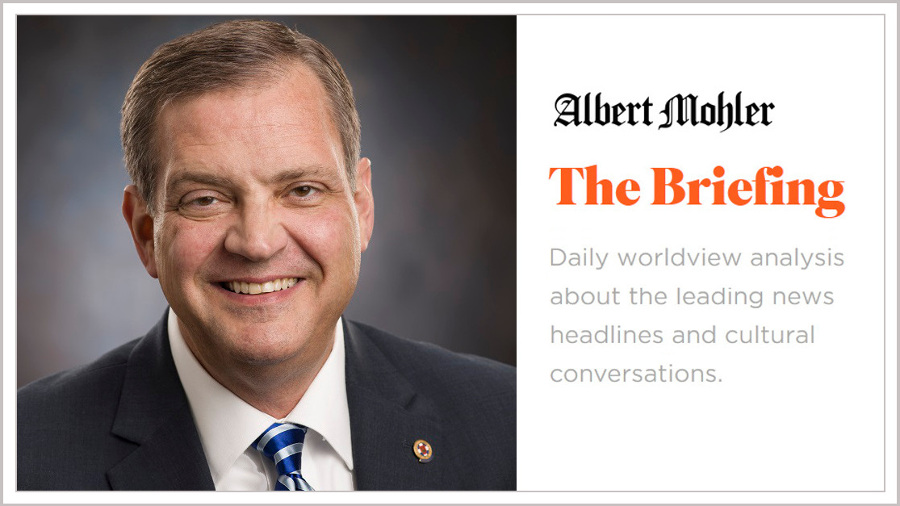

 The first was secular humanism and the developed countries that have fully embraced it (or should we say, have become enslaved by it!). Articles number 6, 2, and 3 are all from a single episode of The Briefing. Read together, they show secular humanism has produced a society that is completely confused in terms of morality –
a society that marginalizes people with Down Syndrome in favor of parents who have murdered their unborn babies with Down Syndrome; a society that is revolted at the idea of treating the mangled remains of aborted fetuses as human remains.
The first was secular humanism and the developed countries that have fully embraced it (or should we say, have become enslaved by it!). Articles number 6, 2, and 3 are all from a single episode of The Briefing. Read together, they show secular humanism has produced a society that is completely confused in terms of morality –
a society that marginalizes people with Down Syndrome in favor of parents who have murdered their unborn babies with Down Syndrome; a society that is revolted at the idea of treating the mangled remains of aborted fetuses as human remains. The second cultural force brought to our attention was the Roman Catholic Church. The reign of Pope Francis, which began in March 2013, has led to growing dissension within the RCC. Recently, it has become clear that this dissension has reached to the very highest levels of the church's hierarchy. Understanding such issues will help us to bring the errors of the RCC to the attention of our Catholic friends, in the hope of opening their minds to the biblical gospel.